Contact Us
Clarity starts here - Connect with us!
As a community-centered practice, CultivatED Minds proudly serves families throughout Central and Northern California, offering comprehensive psychoeducational evaluations and individualized support for children and young adults. Whether you are local or seeking trusted support beyond your immediate area, we are here to help guide the process with expertise and care.
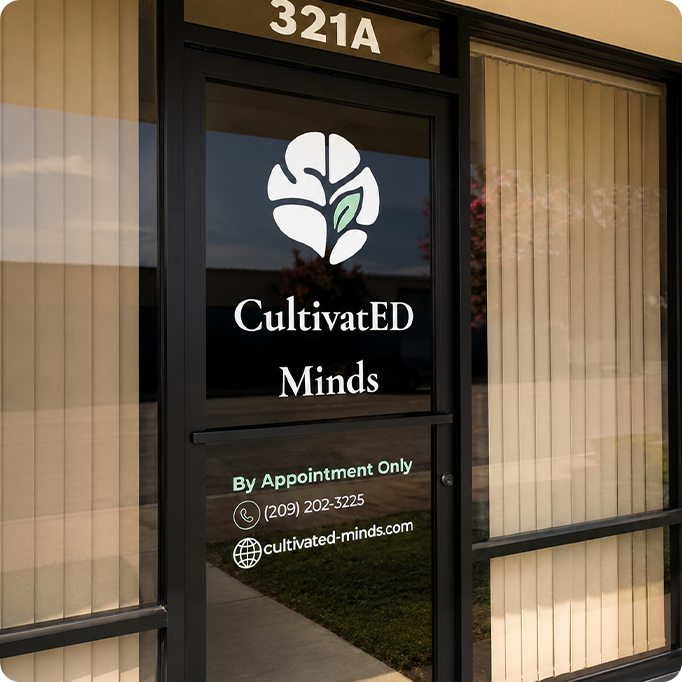


Our Location
321 S. Thor St. Suite A Turlock, CA 95380
P.O. Box
PO Box 202 Turlock, CA 95382Call Us
(209) 202-3225Email Us
info@cultivated-minds.comFAQ
-
We are generally able to assess children as young as preschool age (approximately 3 to 4 years old). At this stage, we can evaluate for developmental concerns such as Autism Spectrum Disorder, Intellectual Disabilities, and other early childhood developmental delays.
Beginning in Kindergarten (around age 5), we are able to expand our assessments to include learning disorders, Attention-Deficit/Hyperactivity Disorder (ADHD), and other conditions that may impact academic and social functioning. Our assessment process is tailored to each child’s developmental level to ensure accurate and meaningful results. If you have specific concerns regarding your child’s development or behavior, please contact us to discuss the most appropriate timing and approach for assessment. -
Yes. While many of our clients are children and adolescents, CultivatED Mind also provides comprehensive assessment services for adults. We work with individuals who are seeking greater understanding of their learning, attention, or social communication profile. Whether you are exploring possible ADHD, Autism Spectrum Disorder, learning differences, or related concerns, an evaluation can offer valuable insight into your strengths and challenges. Our assessments are designed to help you identify strategies, supports, or accommodations that can promote success in work, educational, and daily life settings. If you have questions about adult assessment or are considering an evaluation, please contact us for more information.
-
The length of your child’s assessment will depend on the types of tests given and the specific questions we are addressing. To help your child stay comfortable and focused, we provide regular breaks during testing, and children are welcome to bring snacks, food, and drinks to enjoy throughout their session. Many students find extra motivation in earning small rewards, so children who put forth good effort will have the chance to choose a prize from our clinic’s prize box at the end of their visit. Our experienced psychologists are dedicated to making every child feel supported, encouraged, and confident throughout the assessment process.
-
After a psychoeducational evaluation is completed at CultivatED Minds, the following steps typically occur:
Comprehensive Feedback Session:
You will be scheduled for a feedback session with the Licensed Educational Psychologist (LEP) to review the results. During this meeting, the evaluator will explain the findings, discuss identified strengths and areas of need, and answer any questions you may have.
Detailed Written Report:
You will receive a comprehensive written report that summarizes the assessment results, including cognitive, academic, social-emotional, and/or behavioral findings as appropriate. The report will include clear, individualized recommendations for interventions, strategies, or accommodations to support learning and overall well-being.
Our goal is to ensure that you have a clear understanding of the evaluation results and practical guidance for moving forward, whether at home, school, or work. -
- Review Your Child’s Evaluation Results:
After your child’s school conducts an evaluation, review the results and recommendations provided by the school team. - Determine Your Concerns:
If you disagree with the school’s evaluation or believe it does not fully address your child’s needs, you have the right to request an Independent Educational Evaluation (IEE) at public expense. - Submit a Written Request:
Write a formal letter or email to your child’s school or district’s special education director stating that you are requesting an IEE. Clearly explain your reasons for the request (for example, disagreement with the results or concerns about the evaluation process). - Wait for the School’s Response:
The school district must respond promptly. They may agree to fund the IEE or initiate a due process hearing to show their evaluation is appropriate. - Obtain Information About Approved Evaluators:
If the school agrees to fund the IEE, they will provide you with information about approved independent evaluators. You may also request a list or suggest a qualified evaluator of your choice, as long as they meet district criteria. - Receive and Review the IEE Report:
After the evaluation, you and the school district will receive a written report. The results of the IEE must be considered by the school district in decision-making about your child’s educational program.
- Review Your Child’s Evaluation Results:
-
CultivatED Mind does not bill insurance companies directly. However, clients may be able to obtain partial reimbursement by submitting a “superbill” to their insurance provider. If you wish to seek reimbursement, we recommend contacting your insurance provider in advance to verify coverage for out-of-network psychological or psychoeducational assessment services.

A psychoeducational practice dedicated to understanding how each child learns and supporting growth through evidence-based individualized guidance.
Services
© 2026 CultivatED Minds. All rights Reserved -
Accessibility Statement
-
Privacy Policy
-
Sitemap
Managed and Designed by 